Check out this video i found on the BBC website.
"Konnie takes Seth on a shopping trip to see if she can persuade him to wear only ethically produced clothing. Along the way she describes what terms like fair trade mean and why organically produced cotton and natural leather dyes are better for producers and the environment."
http://www.bbc.co.uk/learningzone/clips/8926.flv

Showing posts with label Shopping. Show all posts
Showing posts with label Shopping. Show all posts
Tuesday, 13 December 2011


Tuesday, 22 November 2011
The difference between Organic cotton and Fairtrade

How do you know if your clothes are made with organic cotton? ...Does this mean the same as fair-trade?
No.
Ethical fashion is threaded with many ethical questions such as... was it made in a sweatshop? Were workers paid fairly? Am I harming the planet by wearing it?
It is difficult to produce a completely ethical garment which is why certain ethical clothes are produced with specific concerns in mind. Some designers are concerned with the way fashion effects the environment. They want to have a positive impact on the planet. Other designers want to make sure the garment worker’s are paid right.
The impact of our clothes is dependant on the label we choose to buy from.
listed below are the differences between Organic cotton and Fairtrade...
Organic cotton is grown using methods that have a low impact on the environment. The production methods used replenish and maintain soil fertility, reduce the use of toxic pesticides and fertilisers and build biologically diverse agriculture. Third-party certification organisations verify that producers use only methods and materials allowed in organic production.
Fair-trade cotton has been on the market since November 2005. The Fairtrade certification process monitors the entire supply chain process, from farm production through manufacture to brand or retailer. The Fair-trade Standards include:
Respect for basic human rights
Decent wages and employment conditions
Ongoing improvements in worker health & safety and environmental protection by control and reduction of chemical inputs
To find out more see the following websites:
www.fairtrade.org.uk
www.ethicaltrade.org
www.pan-uk.org (includes a directory of organic cotton retailers in the UK)
Make yourself familiar with these labels and definitions for the next time you go shopping. And don’t forget to take that fabric bag!
Tuesday, 15 November 2011
Think Alternative this Winter..
I’m in a sticky situation, winter’s coming up and although I don’t want to give up my five year old trainers they are falling apart and are far from being salvageable! Shall I go to the high street and pick any old shoe or look for something a bit more ethical? I opted for the latter and found TOM’s have come out with a new special edition Movember shoe.
The proceeds from the shoe go to raising awareness of cancers affecting men. PLUS they are ethically produced and for every TOM’s shoe purchased, TOM’s donate a pair of shoes to a child who needs them.

For me personally it’s important the shoes look great, and last longer than a season! So I think I am definitely going to pick up a pair...PLUS with these shoes you can wear socks!
Check them out here...
Image Credit- OhNo!Doom Collective on Flickr Creative Commons
The proceeds from the shoe go to raising awareness of cancers affecting men. PLUS they are ethically produced and for every TOM’s shoe purchased, TOM’s donate a pair of shoes to a child who needs them.

For me personally it’s important the shoes look great, and last longer than a season! So I think I am definitely going to pick up a pair...PLUS with these shoes you can wear socks!
Check them out here...
Image Credit- OhNo!Doom Collective on Flickr Creative Commons
Wednesday, 2 February 2011
The perfect fit or a load of rubbish?
Let me tell you about a recent shopping experience of mine. Last week I tried on a pair of jeans in my usual size and they were a tad too tight around the waist (after effects of Christmas!) No big deal. I try on the next size up and they are too loose around the thighs. And to top it all off the person in the dressing room next to me has tried on the same pair of jeans and it was as if these were made for this person!
So, aside from the fact that I walk out of the shop a little defeated, the point is that mass produced and one size fits all clothes may produce a lot of waste, not only in the production stages, but also from piles of unsold clothes left behind as they aren’t a perfect fit for most people (like me!)
On the other hand, many of us are tempted by cheap prices and we are buying a 1/3 more clothing than we did 10 years ago! With trends like harem pants and baggy styles with lots of bits of material hanging off, even more material is being destined for a slow death in landfill, not to mention the dyes seeping through and the toxins being released, all damaging the environment.
But there may be hope! Designers are looking at ways to use new technology to design out waste. What does this mean? Basically, designing clothes so less material is wasted and that means less going to landfill. You can explore these new technologies and methods, such as made to measure clothing and making fabrics that are environmentally friendly, and whether they can be used to create style without waste at the ‘Trash Fashion – Designing out Waste’ exhibition at the Science Museum in London.
For more info on other exciting events, internship opportunities and the latest on ethical fashion, visit the news and events section of the Fashioning an Ethical Industry (FEI) website.
So, aside from the fact that I walk out of the shop a little defeated, the point is that mass produced and one size fits all clothes may produce a lot of waste, not only in the production stages, but also from piles of unsold clothes left behind as they aren’t a perfect fit for most people (like me!)
On the other hand, many of us are tempted by cheap prices and we are buying a 1/3 more clothing than we did 10 years ago! With trends like harem pants and baggy styles with lots of bits of material hanging off, even more material is being destined for a slow death in landfill, not to mention the dyes seeping through and the toxins being released, all damaging the environment.
But there may be hope! Designers are looking at ways to use new technology to design out waste. What does this mean? Basically, designing clothes so less material is wasted and that means less going to landfill. You can explore these new technologies and methods, such as made to measure clothing and making fabrics that are environmentally friendly, and whether they can be used to create style without waste at the ‘Trash Fashion – Designing out Waste’ exhibition at the Science Museum in London.
For more info on other exciting events, internship opportunities and the latest on ethical fashion, visit the news and events section of the Fashioning an Ethical Industry (FEI) website.
Thursday, 7 October 2010
Absolute Vintage

It turned out to be a store that was filled to the brim with vintage goodness. They had everything from hats to shoes to shirts. You can find anything in this store whether your a guy or a girl. I could see why there were more people going in then there were coming out.
The clothes are from every era between the 1930’s and 1980’s. Some clothes are labelled ‘As new’ which are clothes that were never sold which mean they were never worn. Some even have their original labels and price tags. Most other clothes are labelled as ‘Good condition’ these items have been used and collected by the store from previous shoppers.
There’s something charming about buying something that still has its original label on it from 30 years ago. It’s like buying a piece of history, an item that contributes to the current culture of fashion that we now see. It’s like buying clothes with a soul.
It’s important to look in stores like Absolute Vintage and Beyond Retro as all these stores unbeknown to them are easing the pressure on garment workers and reducing the amount of waste created by fast fashion consumption.
You’re not buying something new, wearing it, and throwing it. The quality and style of vintage clothes last forever. We should try to make things last and get the most out of an item and then pass it on to a store like Absolute who can then pass it on to somebody else, extending the life cycle of that piece of clothing.
Imagine wearing a jacket that was designed for somebody like James Dean. Ok that might be a little far fetched but isn’t that what fashion is all about? Transforming you into another world through your clothes?
Do your clothes transform you into another world?
Image Credit- miss.libertine on Flickr by Creative Commons
Thursday, 23 September 2010
Beyond a charity shop.

Vintage shops are very particular about the type of clothes they accept. S, some insist the clothes are in good condition or that they are branded. The clothes you find in these shops are best described as ‘classic pieces’. That means they are not made to fit into trends and have been around for a while and are of good quality.
During a lunch break at work, I hopped down to the Beyond Retro store. It humorously describes itself as ‘selling dead people’s clothes to meet the satirical challenges of east London’s beautiful people’.
It was stacked with shoes, clothes, bags and lots of familiar brands from Ralph Lauren to Hermes, without the bank breaking price tag. I was really impressed with the quality and different styles to shoes from. You do have to spend a bit of time looking for the perfect piece but it pays off when you do! I found a blazer that I have already worn to work and out a few times.
Vintage stores are a great way of keeping up staying close to fashion without becoming a part of the demand that makes workers work harder for less. Have you visited any vintage stores? Let us know!
Image Credit- themostinept on Flickr at Creative Commons
Friday, 20 August 2010
A wallet with a conscience

This is the Holstee Recycled Wallet. I have been looking for a decent wallet ever since I lost my last one and this is perfect. Its minimalist design is perfect for the essentials: credit cards, cash, and even includes a sliding window for your ID card.
The entire wallet is made from recycled plastic and newspapers collected from the streets on Delhi. What makes this purchase even more worthwhile, is that Holstee will be working with a non- profit organisation in India.
This organisation aids and supports rag pickers by providing them with jobs that ensure workers get a fair wage, education and healthcare for all its employees and their families.
It’s practical, and the price tag is as minimalist as the wallet’s design is.
Image Credit- Sillygwalio on Flickr at Creative Commons
Thursday, 27 May 2010
What’s in a name?
We know the names of the people who own the stores where we shop and of the models who model the clothes. But do we know the name of the person making our clothes? Whenever we hear about low paid labourers in the news they are often just grouped as ‘garment workers’.
 Picture from Satara
However, one organisation is doing something different. Ecouterre recently reported on a Dutch non-profit organisation, Satara which has started manufacturing garments in India.
Their aim is to “encourage and empower underprivileged women ... to develop themselves and their enterprise in a structured and continuous manner.”
What makes them stand out in my mind is that they show the profile of each of the workers, a space usually reserved for directors and CEO’s. This shows that the directors and workers are on the same level. You can know the name, see the face and read the stories of the people who are making the clothes.
When shopping on the high street, we know where the clothes are made but it’s difficult to know who made them. This makes it difficult to value and connect to what we’re buying.
It’s so much easier to throw a t-shirt away, when you don’t know the name and face of the person who made it.
Image Credit- Mckaysavage on Flickr at Creative Common

However, one organisation is doing something different. Ecouterre recently reported on a Dutch non-profit organisation, Satara which has started manufacturing garments in India.
Their aim is to “encourage and empower underprivileged women ... to develop themselves and their enterprise in a structured and continuous manner.”
What makes them stand out in my mind is that they show the profile of each of the workers, a space usually reserved for directors and CEO’s. This shows that the directors and workers are on the same level. You can know the name, see the face and read the stories of the people who are making the clothes.
When shopping on the high street, we know where the clothes are made but it’s difficult to know who made them. This makes it difficult to value and connect to what we’re buying.
It’s so much easier to throw a t-shirt away, when you don’t know the name and face of the person who made it.
Image Credit- Mckaysavage on Flickr at Creative Common
Tuesday, 25 May 2010
Confused about what to do?... I am!
Spot the difference
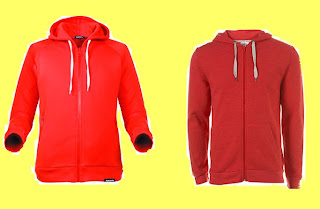
Left: Finisterre Hoodie £90, Right: Topman Hoodie £20
As I started my day today at work, I did the usual: checking emails, reading the news and answering the phone. In between all that, I thought I would take a 5 minute break and see if there were any ethical online shops selling men’s blazers. Well, half an hour later I didn’t find a blazer but I saw this hoodie on Finisterre.
Finisterre were founded in 2002, the UK-based company has always tried to produce high quality athletic gear with the least amount of ecological impact. So they’re an ethical brand. This hoodie retails for £90. Here’s the shocking part. I have seen a similar one in Topman for £20!
They are almost similar in look, except the £90 hoodie on the left has been made with Finisterre’s philosophy of trying to make sustainable clothes to help preserve the world we live in. It is made from organic cotton / merino wool fabric.
And the Topman hoodie on the right is made from 50% polyester and 50% cotton. Polyester is a plastic, and manufacturing polyester burns large amounts of hydrocarbons and a significant amount of CO2 is released into the atmosphere. This is creating the greenhouse effect, and in turn spurs climate change on.
So there’s a dilemma, do I buy the cheaper one or the one, that will not have as much of a negative impact on the environment and is of better quality?
Which would you choose?

Left: Finisterre Hoodie £90, Right: Topman Hoodie £20
As I started my day today at work, I did the usual: checking emails, reading the news and answering the phone. In between all that, I thought I would take a 5 minute break and see if there were any ethical online shops selling men’s blazers. Well, half an hour later I didn’t find a blazer but I saw this hoodie on Finisterre.
Finisterre were founded in 2002, the UK-based company has always tried to produce high quality athletic gear with the least amount of ecological impact. So they’re an ethical brand. This hoodie retails for £90. Here’s the shocking part. I have seen a similar one in Topman for £20!
They are almost similar in look, except the £90 hoodie on the left has been made with Finisterre’s philosophy of trying to make sustainable clothes to help preserve the world we live in. It is made from organic cotton / merino wool fabric.
And the Topman hoodie on the right is made from 50% polyester and 50% cotton. Polyester is a plastic, and manufacturing polyester burns large amounts of hydrocarbons and a significant amount of CO2 is released into the atmosphere. This is creating the greenhouse effect, and in turn spurs climate change on.
So there’s a dilemma, do I buy the cheaper one or the one, that will not have as much of a negative impact on the environment and is of better quality?
Which would you choose?
Friday, 21 May 2010
Do ethical clothes for men exist?
The Metro newspaper features a style guide every other day where they give women fashion tips and where to buy ethically produced clothes, but there’s hardly ever an alternative style guide for men.
Ethical fashion only makes up 7% of the retail market, and men’s ethical fashion only represents 2% of that number!
If you’re a guy championing ethical fashion, and want to buy clothes from an ethical seller you DO have options.

If you’re in London, then you should definitely head down to the Howies store in Carnaby Street. Thier t-shirts are really funky and made to last longer than two washes! The longer your clothes last, the less you have to buy and the better impact you have on the environment.
If it’s shoes you’re after a great guy to know is Tom. TOMS Shoes aim is to “give a pair of new shoes to a child in need. Using the purchasing power of individuals to benefit the greater good.” Every time you buy a new pair of shoes from TOMS, they will donate a pair to a child in need. Children in developing countries often do not have suitable shoes to walk or play around in. This can lead to their feet cutting cut, grazed and the risk of infection or catching a disease is also heightened.
If that’s not a good enough reason for buy from them, I don’t know what is!
A simple Google search of “mens ethical fashion” generates 149,000! It’s all just about doing your homework!
Image 1: Image Credit- Robots_Gaudiramone on Flickr at Creative Commons
Image 2: Image Credit- OhNo!Doom Collective on Flickr Creative Commons
Ethical fashion only makes up 7% of the retail market, and men’s ethical fashion only represents 2% of that number!
If you’re a guy championing ethical fashion, and want to buy clothes from an ethical seller you DO have options.

If you’re in London, then you should definitely head down to the Howies store in Carnaby Street. Thier t-shirts are really funky and made to last longer than two washes! The longer your clothes last, the less you have to buy and the better impact you have on the environment.
If it’s shoes you’re after a great guy to know is Tom. TOMS Shoes aim is to “give a pair of new shoes to a child in need. Using the purchasing power of individuals to benefit the greater good.” Every time you buy a new pair of shoes from TOMS, they will donate a pair to a child in need. Children in developing countries often do not have suitable shoes to walk or play around in. This can lead to their feet cutting cut, grazed and the risk of infection or catching a disease is also heightened.
If that’s not a good enough reason for buy from them, I don’t know what is!
A simple Google search of “mens ethical fashion” generates 149,000! It’s all just about doing your homework!
Image 1: Image Credit- Robots_Gaudiramone on Flickr at Creative Commons
Image 2: Image Credit- OhNo!Doom Collective on Flickr Creative Commons
Tuesday, 23 February 2010
Emma Watson launches new line of clothes.

"I think young people like me are becoming increasingly aware of the humanitarian issues surrounding fast fashion and want to make good choices but there aren't many options out there."
- Emma Watson
Emma Watson aka Hermione from the Harry Potter films has designed a clothing line for People Tree with everything made in India, Bangladesh and Nepal by hand from 100% organic and Fairtrade-certified cotton. About time we were given an alternative to toxin ridden cotton garments.
Organic cotton is grown from non-genetically modified plants and doesn’t use fertilisers or pesticides. Regular cotton can pollute water and poison animals as it is grown with fertilisers and pesticides. Animals fed with food containing cotton seed oil can be poisoned.
The Fairtrade labels all around the coffee counter remind us to choose our coffee carefully but when were in a clothes store we don’t have anything pointing us in the right direction. With recent articles and TV specials we have all become more aware of where our clothes are coming from but we don’t know where to find alternatives. So it’s a positive step to see someone as high profile and fashionable as Emma Watson encouraging us to shop more cautiously.
Emma Watson will be showcasing her new collection for People Tree at the Fairwear 2010 fashion show, at Bristol Cathedral on Thursday, 25th of February.
Image Credit- David Shankbone on Wikimedia Commons at Creative Commons
Thursday, 28 January 2010
Where do you get your Fair trade clothes from?
We often get asked “where can I get fair trade clothes from?” and “I can’t find an alternative place to shop, so I will just stick to what I know.”
As fashion labels and big stores are becoming more conscious of where their clothes come from, you as a consumer now have more options than you think.
Take high street stores such as Topshop. They stock ethical fashion brands such as People Tree as well as Gossypium. You know you have no excuse when Topshop is getting involved! Topshop also stock Gossypium and Hug all of which are fairly traded brands.
As fashion labels and big stores are becoming more conscious of where their clothes come from, you as a consumer now have more options than you think.
Take high street stores such as Topshop. They stock ethical fashion brands such as People Tree as well as Gossypium. You know you have no excuse when Topshop is getting involved! Topshop also stock Gossypium and Hug all of which are fairly traded brands.
Subscribe to:
Posts (Atom)