
Showing posts with label Fast Fashion. Show all posts
Showing posts with label Fast Fashion. Show all posts
Tuesday, 25 October 2011
Salmon skin la? Very fashionable!
When you think of Malaysia.. what comes to mind? Big Skyscrapers, Petaling towers, the beach, Orangutans? Would you think sustainable fashion with salmon skin leather?
Malaysia's first eco brand ULTRA challenges norms of popular fashion and looks ULTRA cool while doing it!
Click through the slide show and read about this amazing new venture! Make sure you read the comments at the bottom!


Tuesday, 18 October 2011
Football...going ethical?
Maybe some of us can't tell our Rooneys from our Fabregas (no seriously, there are people who could not tell them apart or which teams they play for) but perhaps what is more important is what they play their games in!
The Ecologist, one of my favourite online eco magazines, is always full of very useful tips on how to green our wardrobes, our furniture, our make up, our gadgets... the list goes on! But this article on 'What to wear and how to buy it' really scores a goal on where to go for more ethical fashion sportswear brands.. MOVE OVER BIG BRAND NAMES!
Wednesday, 1 June 2011
Fashion: to die for
Did you know?
In 1977, we required 31 million tonnes of fabric to keep us satisfied... in just 30 years (2007)this has risen to almost 80 million tonnes!
How can we shop with a greater conscience? How do you keep up to date with current trends, yet at the same time, not be responsible for fashion's global footprint?
Lucy Siegle's book 'To Die For (Is Fashion Wearing out our world?)' has these answers and more. Whether it is talking about the river in China whose water has turned purple through the illegal disposal of dye through to the human cost of child labour in Bangladesh.
If you have wondered, I would like to do something but am just not sure how, this book is for you! Pick it up today!
In 1977, we required 31 million tonnes of fabric to keep us satisfied... in just 30 years (2007)this has risen to almost 80 million tonnes!
How can we shop with a greater conscience? How do you keep up to date with current trends, yet at the same time, not be responsible for fashion's global footprint?
Lucy Siegle's book 'To Die For (Is Fashion Wearing out our world?)' has these answers and more. Whether it is talking about the river in China whose water has turned purple through the illegal disposal of dye through to the human cost of child labour in Bangladesh.
If you have wondered, I would like to do something but am just not sure how, this book is for you! Pick it up today!
Tuesday, 15 March 2011
Totally ‘Unreel’!
What happens when you put together 9 young people from Leicester, the issue of fast fashion and a film maker?
What you get is totally ‘Unreel’! A film documentary that looks beyond the catwalk and at the impact our demand for fast fashion is having on garment workers in Asia.
Come and see this fantastic ‘behind the scenes’ style film and meet the inspiring young people who made it, in an evening to celebrate their achievements.
To reserve your place, please contact Rejni Patel from the Oadby Youth Group: rejni.patel@leics.gov.uk
Where: Council Chambers in Braunstone Civic Centre, Leicester
Date: Friday 18th March
Time: 6pm onwards
What you get is totally ‘Unreel’! A film documentary that looks beyond the catwalk and at the impact our demand for fast fashion is having on garment workers in Asia.
Come and see this fantastic ‘behind the scenes’ style film and meet the inspiring young people who made it, in an evening to celebrate their achievements.
To reserve your place, please contact Rejni Patel from the Oadby Youth Group: rejni.patel@leics.gov.uk
Where: Council Chambers in Braunstone Civic Centre, Leicester
Date: Friday 18th March
Time: 6pm onwards
Tuesday, 18 January 2011
Taking Liberties

I love most things by Monsoon, the bags, the clothes, the earrings...
So just imagine my dismay when I read in a recent report that they, along with M&S, Debenhams, NEXT and the Arcadia group were the bad guys. The report is by Labour behind the Label, which campaigns to support garment workers worldwide. ‘Taking Liberties – the story behind the UK high street’ investigates the lives of garment workers who produce clothing for these highstreet brands.
Did you know that all of the retailers mentioned, except the Arcadia group, are members of Ethical Trading Initiative and all sell clothes at a price that should allow a living wage? This means that that wage should enable the garment worker and their dependents to meet their everyday living, nutrition, education and health needs. Despite signing up to a much needed initiative, the workers in two different factories in Gurgaon, India, reported long hours of work in sweltering temperatures, verbal and physical abuse, unsafe water and poor sanitation and earnings below wage needed to live a decent life.
So why is this happening if the retailers make ethical claims and do really well in ‘ethical’ ratings? There is obviously a gap in what is being said and the actual implementation of policies. Are corporate social responsibility policies enough? Or are retailers just avoiding the real issues?
Click here to read the full report and the list of suggested actions that we can take to demand that UK retailers and politicians address the issue and take action.
Am I going to stop buying from Monsoon? Probably not. That would be taking the easy way out with no real benefit to anyone. But I’m certainly going to use my voice to help the garment workers of Gurgaon. Will you?
Friday, 5 November 2010
A different idea for a holiday

As the end of the year fast approaches (can you believe its already November??), think about getting a gift that makes a change to the world.
The Guardian published a great ethical fashion directory which lets you choose what to buy, and the best news? Its all ethical! Its from 2008 however, and lots of new names are popping up... do you know of any?
Let us know and we will give them a shout out...
Let your holidays be different this year! (Yes, we are already thinking of our holidays)
Wednesday, 8 September 2010
Third World workers’ wage whining unlikely to spoil Canadian fashion discounts
Here is an excellent article written by Stephen Frost for CSR Asia, that we want to share with you.
As tens of thousands of workers in Bangladesh attacked factories and smashed vehicles in the capital Dhaka in protests over low wages this month, Canadian consumers were reassured that no matter what happened clothes would still be cheap.
If that sounds like the lead for an article in The Onion – an online satirical magazine – then think again. This analysis comes via an article published by Canada’s CBC on 6 August, which seemed to suggest that protests in Bangladesh over wage hikes shouldn’t concern Canadian consumers because clothing prices wouldn’t increase. Phew! I bet that’s a relief to Canadians concerned that worker anger in Bangladesh over an official wage hike to US$43 per month, and which resulted in workers injured and killed and labour leaders hiding for fear of violent retribution, would lead to more expensive jeans.
I stumbled upon this article after a visit to the ever excellent Social Alterations (an Education Lab for Socially Responsible Fashion Design), and read a short critique by Nadira Lamrad. She rightly focused on a comment by a spokesman for global retailer H&M, who was quoted as saying that “increased wages create better working conditions and are only positive. Furthermore, it is competition-neutral and affects all buyers equally.”
As Lamrad points out, you can only take these arguments so far. The first one, that increased wages are positive, stalls if wages increase too much. After all, H&M are not sourcing from Bangladesh because of high wages. The journalist who conducted the interview should have, upon hearing this, asked for a comment on Bangladeshi versus Chinese wages and whether the company believes that the 41.5 per cent real wage increase in China since 2004 for factory migrant workers (to around $US205 per month – or nearly five times as much as Bangladesh) is seen internally as “only positive”.
The second argument, that increased wages are competition-neutral, runs counter to the view from the procurement end of any retail business, which is focussed on finding ever more competitive suppliers. It also, as Lamrad argues, fails to consider that minimum wages are not enforced uniformly in Bangladesh (or, for that matter, in most places where apparel is produced), and that buyers can still find a competitive advantage by using suppliers who don’t comply with the law. Does H&M truly believe that some of its less ethical competitors are not advantaged by using factories that cut costs – and thus reduce product prices – by paying lower wages, ignoring health and safety and environmental standards, and failing to comply with a raft of other laws, standards and regulations?
Although not explicit in the CBC article, it also raises the gap between ethical sourcing (i.e., the work done by CSR or other similar departments/personnel) and day-to-day procurement. From the CSR team’s perspective, increased wages are positive. Looking at it from procurement (and sales), increased wages have to be priced into the product and ultimately reduce profit. The CBC quotes an industry expert who says that an 80 per cent wage hike (in Bangladesh) may translate into a four per cent retail hike. That seems about right. It sounds small in the context of the article, but a four per cent reduction in profit on apparel would eat into H&M’s quarterly figures significantly. It is hardly something that the Board would willingly (or could) foist on shareholders.
All of which leads to an uncomfortable, but logical, conclusion: given current retail pricing, wages and conditions generally for factory workers cannot improve much more. The CBC gets it perfectly correct (more by luck than design). The real issue is not Bangladeshi workers fighting for a decent wage; it’s that consumers won’t be slugged with higher prices. Or to put it another way; until consumers pay more, protests by Bangladeshi workers will result in few gains; unless – like Chinese workers – they become more competitive (i.e., unit labour costs fall). Yet even then, there is only so far that unit labour costs can fall. From 1995 to 2004, according to The Economist, they fell 43 per cent in China. That appears to have bottomed out, and firms fleeing China’s east cost as wages rise may be an indicator that H&M’s spokesman is not entirely correct on perceiving rising wages as only positive.
If this conclusion is correct, that improvement in wages and conditions have hit the ceiling due to the prices consumers are willing to pay, then we are in, as my mother would say, a pickle (or a difficult position). Initiatives designed to improve worker conditions that rely on corporate support are destined to come to a standstill as returns diminish. Unit labour costs can fall as buyers work with suppliers to increase efficiency, and working conditions (including wages) can be improved. But without a paradigm shift in the way we understand the relations between consumers, retailers, buyers and manufacturers (and a myriad of other actors), Bangladeshi workers are destined to read versions of that CBC headline over and over again.
If I was writing for The Onion, the satirical headline based on all of this would be as follows: “Clothing prices fall as offshore workers take 35% hit on already insignificant wages”. Now there would be a headline for Canadian consumers
Tuesday, 31 August 2010
"Eco-Fashion Tale" - 'The Empress' new clothes..'
Recent fairy tales for children have included Toy Story, Finding Nemo and Up. None of these films would be classified as traditional Cinderella fairy tale types of stories. But they are fairy tales none the less. They all deal with adult themes but in a fun, playful way.
Could Toy Story be encouraging young people to appreciate the toys they already have, and not disregard them when new toys come along?
Should there be a “Clothes Story”? they may not come alive when your out of the room but the journey they have been on is just as important and how you treat your clothes after a while can effect our own world.
Dimitra Giannopoulou has created a fairy tale about fast fashion for teenagers. She believes this is the strongest way to engage and get the message across to young people. I guess it is better that they know about the issues sooner rather than later.
British actress Gabrielle Anwar said in an interview with EcoStilleto that she
“Used to watch a cartoon show on the BBC about these little creatures called the Wombles who went around picking up trash and recycling it in their underground warren. There was an enchanting quality to recycling, so I aspired to be Womble-like.”
The brain is the most open-minded when young, could childhood be the best time to plant the ethical fashion seeds?
Watch the film and let us know your thoughts...
Could Toy Story be encouraging young people to appreciate the toys they already have, and not disregard them when new toys come along?
Should there be a “Clothes Story”? they may not come alive when your out of the room but the journey they have been on is just as important and how you treat your clothes after a while can effect our own world.
Dimitra Giannopoulou has created a fairy tale about fast fashion for teenagers. She believes this is the strongest way to engage and get the message across to young people. I guess it is better that they know about the issues sooner rather than later.
British actress Gabrielle Anwar said in an interview with EcoStilleto that she
“Used to watch a cartoon show on the BBC about these little creatures called the Wombles who went around picking up trash and recycling it in their underground warren. There was an enchanting quality to recycling, so I aspired to be Womble-like.”
The brain is the most open-minded when young, could childhood be the best time to plant the ethical fashion seeds?
Watch the film and let us know your thoughts...
Tuesday, 24 August 2010
Emma Watson carries on saving the world!

Emma and People Tree are going to be launching a brand new spring/summer 2011 range. This is going to be showcased at Prince Charles’s private gardens. It is going to be a garden party that is open to the public with the theme being environment and sustainable living.
Ethical fashion has in its time built up a bit of a reputation for being too pricey and appealing to mostly older people. Brands like People Tree are really bringing ethical fashion to the front of the limelight and putting it on par with brands such as Topshop and Asos who stock People Tree products.
It’s great that Emma Watson is fronting the campaign as ethical fashion only tends to get spoken about by older celebrities. Emma Watson is a role model to young people by showing them positive alternative's to the high street labels.
Emma said in a statement: ‘I’m so thrilled that People Tree will be showing the spring summer collection at a garden party to make a difference. I think the Prince of Wales initiative is such a brilliant idea and I’m thrilled.’
We’re thrilled to Emma!
Image Credit- David Shankbone on Flickr at Creative Commons
Tuesday, 25 May 2010
Confused about what to do?... I am!
Spot the difference
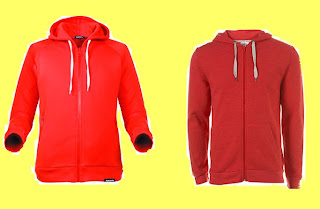
Left: Finisterre Hoodie £90, Right: Topman Hoodie £20
As I started my day today at work, I did the usual: checking emails, reading the news and answering the phone. In between all that, I thought I would take a 5 minute break and see if there were any ethical online shops selling men’s blazers. Well, half an hour later I didn’t find a blazer but I saw this hoodie on Finisterre.
Finisterre were founded in 2002, the UK-based company has always tried to produce high quality athletic gear with the least amount of ecological impact. So they’re an ethical brand. This hoodie retails for £90. Here’s the shocking part. I have seen a similar one in Topman for £20!
They are almost similar in look, except the £90 hoodie on the left has been made with Finisterre’s philosophy of trying to make sustainable clothes to help preserve the world we live in. It is made from organic cotton / merino wool fabric.
And the Topman hoodie on the right is made from 50% polyester and 50% cotton. Polyester is a plastic, and manufacturing polyester burns large amounts of hydrocarbons and a significant amount of CO2 is released into the atmosphere. This is creating the greenhouse effect, and in turn spurs climate change on.
So there’s a dilemma, do I buy the cheaper one or the one, that will not have as much of a negative impact on the environment and is of better quality?
Which would you choose?

Left: Finisterre Hoodie £90, Right: Topman Hoodie £20
As I started my day today at work, I did the usual: checking emails, reading the news and answering the phone. In between all that, I thought I would take a 5 minute break and see if there were any ethical online shops selling men’s blazers. Well, half an hour later I didn’t find a blazer but I saw this hoodie on Finisterre.
Finisterre were founded in 2002, the UK-based company has always tried to produce high quality athletic gear with the least amount of ecological impact. So they’re an ethical brand. This hoodie retails for £90. Here’s the shocking part. I have seen a similar one in Topman for £20!
They are almost similar in look, except the £90 hoodie on the left has been made with Finisterre’s philosophy of trying to make sustainable clothes to help preserve the world we live in. It is made from organic cotton / merino wool fabric.
And the Topman hoodie on the right is made from 50% polyester and 50% cotton. Polyester is a plastic, and manufacturing polyester burns large amounts of hydrocarbons and a significant amount of CO2 is released into the atmosphere. This is creating the greenhouse effect, and in turn spurs climate change on.
So there’s a dilemma, do I buy the cheaper one or the one, that will not have as much of a negative impact on the environment and is of better quality?
Which would you choose?
Tuesday, 30 March 2010
I don’t want to buy ANOTHER one!
I was out to dinner the other day with friends, and they all noticed I was wearing the same shirt that I had been wearing to nearly all the recent events I had been to. They wanted to know why I insisted on wearing the same shirts over and over again.
The reason I wear the same three shirts is because they were quite expensive purchases and I also feel a little bad as I bought them from an unethical brand. Because of this I try and give my clothes an ethical life by wearing it as much as possible to make sure the worker’s work has not gone in vain. I think it would just be disrespectful to the worker if I was to treat his or her work with disregard.
I figured boycotting brands would mean the workers would lose their jobs. Besides, boycotting is a bit drastic and difficult for me to do as I haven’t been able to find an ethical brand whose designs I like. I think if I just buy less then I won’t be adding to the heavy workload of the garment workers.
I alone cannot improve working conditions or pay. But I can reduce the pressure of the workload on the workers by controlling how much I buy.
The idea of not wearing the same outfit twice is one we should work against. Especially as these days it takes clothes seen on catwalks to be seen on the high street within six weeks. Imagine how many garments the workers must put together in such a short amount of time.
Only about 8 years ago it would be unheard of for clothes seen on catwalks to be on high streets shelves in such a short amount of time! This adds pressure on the production line to deliver faster results. And workers tend to get treated like machines, sewing 60 sleeves to 60 shirts in under a minute.
Instead of buy, buy, buy, we should take what we already have and make it last longer. So even if it was not an ethical purchase you can try and give the product an ethical life!
The reason I wear the same three shirts is because they were quite expensive purchases and I also feel a little bad as I bought them from an unethical brand. Because of this I try and give my clothes an ethical life by wearing it as much as possible to make sure the worker’s work has not gone in vain. I think it would just be disrespectful to the worker if I was to treat his or her work with disregard.
I figured boycotting brands would mean the workers would lose their jobs. Besides, boycotting is a bit drastic and difficult for me to do as I haven’t been able to find an ethical brand whose designs I like. I think if I just buy less then I won’t be adding to the heavy workload of the garment workers.
I alone cannot improve working conditions or pay. But I can reduce the pressure of the workload on the workers by controlling how much I buy.
The idea of not wearing the same outfit twice is one we should work against. Especially as these days it takes clothes seen on catwalks to be seen on the high street within six weeks. Imagine how many garments the workers must put together in such a short amount of time.
Only about 8 years ago it would be unheard of for clothes seen on catwalks to be on high streets shelves in such a short amount of time! This adds pressure on the production line to deliver faster results. And workers tend to get treated like machines, sewing 60 sleeves to 60 shirts in under a minute.
Instead of buy, buy, buy, we should take what we already have and make it last longer. So even if it was not an ethical purchase you can try and give the product an ethical life!
Friday, 26 March 2010
How to get the spotlight on Ethical clothes?
Whenever I do look for organic or ethically produced products the one thing that holds me back from buying it, is the price.
A pair of jeans that would cost me £30 on the high street cost more just because they are ethically produced. But at the same time I don’t want to buy something that I know has been made at the expense of someone else.
At a recent ‘Fashion Forward’ event hosted by Fashioning an ethical industry, the attendees were asked how to get ethical fashion into the mainstream. In my opinion, the one thing that stops a large majority of people from making thoughtful purchases is the price.
Yet a lot of people thought ethical fashion was in the same league as Prada, Dior and Gucci “If people can pay that much for Gucci, then they can pay that much for an ethical product.”
I ask - who is buying Gucci anyway? Should ethical fashion be compared to luxury brands? Or should ethical fashion start looking at where the majority of clothing purchases are made?
Value retailers (cheap retailers) have doubled in size within the last five years. 40% of clothes are now bought from these retailers in the UK. So if you want people to pay more attention to ethical clothes you should look at where the majority shops and why they shop there. It’s important to know your competition.
People Tree seems to have the right idea. Reasonable prices and fashionable clothes with the added bonus of Emma Watson as the face of the brand. Their clothes could easily be mistaken for something from the TopShop brand.
What do you think?
A pair of jeans that would cost me £30 on the high street cost more just because they are ethically produced. But at the same time I don’t want to buy something that I know has been made at the expense of someone else.
At a recent ‘Fashion Forward’ event hosted by Fashioning an ethical industry, the attendees were asked how to get ethical fashion into the mainstream. In my opinion, the one thing that stops a large majority of people from making thoughtful purchases is the price.
Yet a lot of people thought ethical fashion was in the same league as Prada, Dior and Gucci “If people can pay that much for Gucci, then they can pay that much for an ethical product.”
I ask - who is buying Gucci anyway? Should ethical fashion be compared to luxury brands? Or should ethical fashion start looking at where the majority of clothing purchases are made?
Value retailers (cheap retailers) have doubled in size within the last five years. 40% of clothes are now bought from these retailers in the UK. So if you want people to pay more attention to ethical clothes you should look at where the majority shops and why they shop there. It’s important to know your competition.
People Tree seems to have the right idea. Reasonable prices and fashionable clothes with the added bonus of Emma Watson as the face of the brand. Their clothes could easily be mistaken for something from the TopShop brand.
What do you think?
Friday, 12 March 2010
One girl wears One dress for 365 days
Its crazy how anytime we hear of a big event coming up we automatically think ‘I need to go shopping’. When all you need to do is put your creative hat on and look at what you already have and experiment.
Certain TV shows promote excessive spending and think to be fashion forward; you need to own a closet like Victoria Beckham’s. Fashion is a form of art and allows you to express who you are through the clothes you wear. Shows that feature young, well groomed, rich girls who appear in a new dress in every scene are expressing their wealth as opposed to their creative selves.
Sheena Mathieken on the other hand is showing us all how one dress can be worn to just about any look or event. She has taken on the challenge to wear one dress everyday for a whole year as part of a Uniform Project

All the donations made from the project will benefit the Akanksha Foundation, a grassroots organization in India that helps fund education and provide school uniforms in the country's slums.
She accessorises the basic dress with vintage and borrowed extras. The dress is a basic black dress that can be worn back to front or as an open tunic.
Clicking through the pictures I thought it was amazing how this girl seemed to look fashionable and completely different everyday but with the same dress.
It is important to see the positive message in her mission. We buy a lot of clothes but we don’t really need them. And people in other parts of the world can barely afford a uniform.
The time has come for you to take what you already own and inject your personality into it!
Certain TV shows promote excessive spending and think to be fashion forward; you need to own a closet like Victoria Beckham’s. Fashion is a form of art and allows you to express who you are through the clothes you wear. Shows that feature young, well groomed, rich girls who appear in a new dress in every scene are expressing their wealth as opposed to their creative selves.
Sheena Mathieken on the other hand is showing us all how one dress can be worn to just about any look or event. She has taken on the challenge to wear one dress everyday for a whole year as part of a Uniform Project

All the donations made from the project will benefit the Akanksha Foundation, a grassroots organization in India that helps fund education and provide school uniforms in the country's slums.
She accessorises the basic dress with vintage and borrowed extras. The dress is a basic black dress that can be worn back to front or as an open tunic.
Clicking through the pictures I thought it was amazing how this girl seemed to look fashionable and completely different everyday but with the same dress.
It is important to see the positive message in her mission. We buy a lot of clothes but we don’t really need them. And people in other parts of the world can barely afford a uniform.
The time has come for you to take what you already own and inject your personality into it!
Tuesday, 9 March 2010
Thought of the day

It’s you’re birthday and you’ve seen a dress on the high street that is £30 and another similar one for £60. Which one do you go for?
Now what if I told you that the £60 dress has been ethically produced; the workers who made it have been paid properly and under safe and comfortable working conditions. But the £30 dress is being modelled by your favourite actress and has bypassed ethical concerns. Now which dress do you choose?
Ethical fashion is quietly becoming a top priority for shoppers. Even Tesco has started making clothes from end of line stock that would have gone to the landfill and affected the environment. Clearly the demand for ethical fashion is rising.
But studies still find that having image based campaigns are more popular than those that use being ethical as the main selling point. Take American Apparel for example. They began using ethical fashion as their unique selling point but had to switch to a more image based racier marketing strategy because it brought in more revenue. People do care about being ethical but what priorities come before being ethical? And how can we change this?
Friday, 19 February 2010
Gaining vanity, Losing morals
You’ve waited 4 months and spent £60 on a piece of Lyle and Scott knit. You’re feeling good, confident and looking cool. As you come out of the station you see the homeless guy wearing the same knit how do you feel?
You’d feel embarrassed and the item would be of less value to you. Right? Not to worry though you’re favourite brands are doing something about this. It was reported by the Evening Standard Lyle & Scott threatened to torch up to £1 million worth of unsold sweaters....but is this really the way to resolve issues of unsold stock when something positive could come out of excess supplies?
“Cynthia Magnus, a postgraduate student, stumbled upon cut-up clothes outside one of H&M's biggest outlets in Manhattan's Herald Square: slashed Puffa jackets and gloves with the fingers chopped off. Just 50 feet away, a homeless man slept on cardboard boxes.”
-Bonfire of the Fashion Vanities, The Evening Standard
The UK has a population of 58 million with more than 4 people per 1,000 estimated to be homeless. To retailers it is better to burn the clothes and damage the environment than donate and help 14.5 million homeless people. Does this seem like the right way of preserving a brand name?
Surely taking off the brand label and donating the clothes to shelters would be more appropriate. The material could go to organisations that make something new out of clothes like Traid.
The amount of energy used in burning clothes has a huge impact on the environment.
The manufacturing process uses a lot of energy through its use of polyester and other synthetic fabrics they require large amounts of crude oil which release emissions. They include explosive organic compounds, acid gases such as hydrogen chloride, which can cause or aggravate the respiratory system.
Is this the real price of our vanity?
Read the article and let us know what you think...
Bonfire of the Fashion Vanities
It’s time we stopped measuring ourselves against logos we wear and brands we buy.
You’d feel embarrassed and the item would be of less value to you. Right? Not to worry though you’re favourite brands are doing something about this. It was reported by the Evening Standard Lyle & Scott threatened to torch up to £1 million worth of unsold sweaters....but is this really the way to resolve issues of unsold stock when something positive could come out of excess supplies?
“Cynthia Magnus, a postgraduate student, stumbled upon cut-up clothes outside one of H&M's biggest outlets in Manhattan's Herald Square: slashed Puffa jackets and gloves with the fingers chopped off. Just 50 feet away, a homeless man slept on cardboard boxes.”
-Bonfire of the Fashion Vanities, The Evening Standard
The UK has a population of 58 million with more than 4 people per 1,000 estimated to be homeless. To retailers it is better to burn the clothes and damage the environment than donate and help 14.5 million homeless people. Does this seem like the right way of preserving a brand name?
Surely taking off the brand label and donating the clothes to shelters would be more appropriate. The material could go to organisations that make something new out of clothes like Traid.
The amount of energy used in burning clothes has a huge impact on the environment.
The manufacturing process uses a lot of energy through its use of polyester and other synthetic fabrics they require large amounts of crude oil which release emissions. They include explosive organic compounds, acid gases such as hydrogen chloride, which can cause or aggravate the respiratory system.
Is this the real price of our vanity?
Read the article and let us know what you think...
Bonfire of the Fashion Vanities
It’s time we stopped measuring ourselves against logos we wear and brands we buy.
Subscribe to:
Posts (Atom)